Dry winter skin isn’t a moisturizer problem. It’s a skin barrier problem. Skip the hot water and harsh cleansers that strip your natural oils. Instead, lock in hydration within three minutes of washing, add gentle weekly exfoliation, and reapply cream (not mist) during the day. Your inside matters too water, sleep, and omega-3s repair what topical products can’t reach.
Last November, I stood in my bathroom staring at my reflection. My foundation looked chalky. Tiny white flakes dotted my forehead. That tight, itchy feeling started right after my morning shower and stuck around all day. Sound familiar?
I’d already bought three new moisturizers that month. Expensive ones. The kind beauty influencers swear by in 60-second videos. But here’s what nobody mentions in those videos piling on more product when your skin barrier is broken is like trying to fill a bucket that has holes in the bottom.
What’s Really Happening to Your Skin Right Now

When temperatures drop between October and March, the air outside gets drier. Inside, we crank up the heat. Your skin loses moisture faster than it can replace it, and the protective barrier that normally holds water in starts breaking down.
That’s when you get that uncomfortable tightness after washing your face, makeup that won’t sit right, and flaking that won’t quit no matter how much lotion you apply.
The humidity level in most heated homes during winter drops to around 10-20%. Your skin prefers something closer to 40-60%. That gap is what you’re fighting.
Why Hot Showers Make Everything Worse
I used to wash my face with the hottest water I could stand. Felt amazing in the moment. Made my skin feel soft and clean.
But dermatologists at the American Academy of Dermatology say hot water strips away your skin’s natural lipid layer, the oils that keep moisture locked in.
Switching to lukewarm water (around 86-90°F, which feels barely warm to the touch) changed things for me within a week. My skin stopped feeling tight immediately after cleansing. I also switched to a pH-balanced cleanser instead of my old foaming face wash.
Those foam cleansers usually have a pH of 9 or 10, but your skin’s natural pH sits around 4.5-5.5. When you use products that don’t match your skin’s pH, you’re basically telling your protective barrier to clock out early.
On really dry mornings, I skip cleanser completely. Just splash with water, pat dry gently with a towel. No rubbing. Rubbing pulls at your skin and wicks away the little bit of moisture you have left.
The Three-Minute Window You’re Probably Missing
Here’s something I learned from a dermatologist interview in the Journal of Clinical and Aesthetic Dermatology you’ve got about three minutes after washing your face before the water in your skin starts evaporating. Three minutes. That’s it.
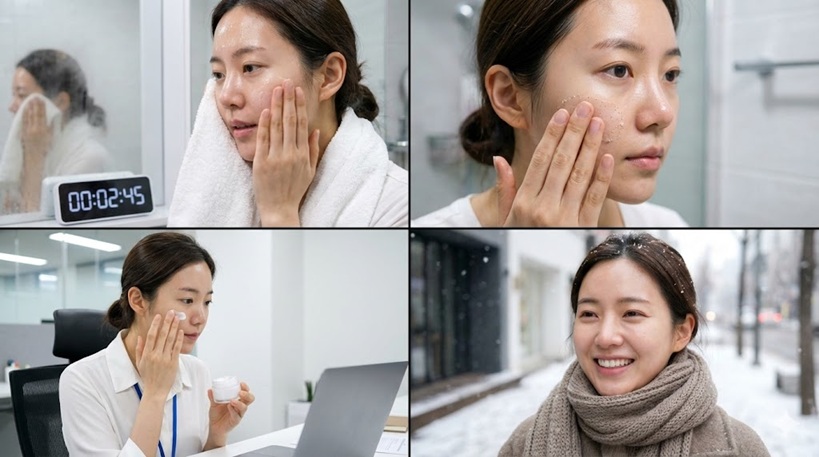
I used to wander around my apartment after showering, make coffee, check my phone. By the time I applied moisturizer, my skin was already drying out. Now I keep my products right next to the sink. As soon as I pat my face dry, I layer them on while my skin is still slightly damp.
The order matters toner first to prep your skin, then a hydrating serum (I use one with hyaluronic acid), then a cream, then (and this is the part I used to skip) an occlusive layer. That’s your thicker cream or facial oil that seals everything underneath. Without that final step, moisture just escapes back into the air.
Think of it like this the serum brings water to your skin, the cream holds it there, and the occlusive layer is the lid that keeps it from evaporating. You need all three.
What to Know About Exfoliation (Most People Get This Wrong)
When I first dealt with flaky skin, my instinct was to scrub it off. Physical scrubs with those little beads or crushed walnut shells. Big mistake. That kind of aggressive exfoliation creates micro-tears in your already-compromised skin barrier.
Chemical exfoliants work differently. AHA (alpha hydroxy acid) and PHA (polyhydroxy acid) dissolve the bonds between dead skin cells so they slough off naturally. A 2019 study in the International Journal of Cosmetic Science found that properly exfoliated skin absorbs moisturizer almost twice as effectively.
But here’s the catch once a week is enough. Maybe twice if your skin tolerates it. I use a gentle AHA toner every Saturday night, then follow immediately with a hydrating sheet mask. The exfoliation clears the path, the mask floods your skin with moisture, and you wake up looking noticeably better.
Don’t exfoliate more just because you see flakes. Those flakes mean your barrier is already stressed. Over-exfoliating makes it worse.
Why Face Mists Don’t Actually Fix Afternoon Dryness
Around 2 PM every day, my skin would start feeling tight again. I kept a face mist in my desk drawer and spritzed myself every hour. Felt refreshing. Did absolutely nothing.
Face mists deliver water to the surface of your skin, but without an occlusive layer on top, that water evaporates in minutes, sometimes taking your skin’s existing moisture with it. You’re actually making things drier.
What works keeping a small jar of facial cream or a rollerball oil in your bag. When that tight feeling starts (usually between 2-4 PM when office heating peaks), dab a bit of cream on your cheeks, forehead, and around your nose. Just a little. You’re not doing a full reapplication, just reinforcing that barrier where it’s wearing thin.
I use a lightweight moisturizer during the day because I don’t want to look greasy at work, but the principle is the same. Add a protective layer, not just water.
The Inside Part Nobody Talks About Enough
You can’t moisturize your way out of dehydration. I learned this the hard way after spending $200 on products and seeing minimal improvement.
Your skin cells need water from inside your body to stay plump and functional. Dermatologists recommend 6-8 glasses of water daily, but that increases in winter when indoor heating dries you out. I started carrying a water bottle everywhere and actually tracking my intake. Within two weeks, my skin looked different. Not perfect, but noticeably less dull.
Omega-3 fatty acids also matter more than I thought. These healthy fats (found in salmon, walnuts, flaxseed, and avocado) help your skin rebuild its protective barrier from the inside. A study in the Journal of the American Academy of Dermatology linked higher omega-3 intake to improved skin barrier function and reduced water loss.
Sleep is the other piece. When you sleep, your skin increases blood flow and rebuilds collagen. Getting less than 6 hours consistently interferes with that repair process. I noticed that on nights when I stayed up past midnight, my skin looked noticeably worse the next morning drier, duller, older.
Also worth mentioning coffee and wine are both diuretics, meaning they pull water out of your system. I’m not saying don’t drink them (I definitely still do), but balance them with extra water and maybe switch your evening wine to herbal tea a few nights a week.
What Works, What Doesn’t, and What You Need to Figure Out for Yourself
What consistently works for most people
Lukewarm water instead of hot, a gentle pH-balanced cleanser (CeraVe Hydrating Cleanser and La Roche-Posay Toleriane are solid drugstore options), applying moisturizer within three minutes of cleansing, adding an occlusive final layer, gentle chemical exfoliation once weekly (Paula’s Choice 8% AHA Gel and The Ordinary Lactic Acid 5% are good starting points), reapplying cream during the day instead of using mist, drinking more water, eating omega-3 rich foods, and sleeping 7-8 hours.
What doesn’t work
Hot showers, harsh foaming cleansers, physical scrubs with abrasive particles, over-exfoliating (more than twice weekly), relying only on face mists, skipping the occlusive layer, and thinking expensive products automatically work better than affordable ones.
What depends on your specific skin
How much exfoliation you can handle, which specific ingredients your skin likes (some people love hyaluronic acid, others find it makes them drier in low-humidity environments), whether you need a lightweight lotion or heavy cream, and how often you need to reapply during the day.
The uncomfortable truth is you’ll need to experiment a bit. What worked for your friend might irritate your skin. What works in October might not be enough by January. Pay attention to how your skin feels and adjust.
Q&A
How do I know if my skin barrier is actually damaged?
Signs include tightness after cleansing, stinging when you apply products (even ones that never bothered you before), increased sensitivity to everything, persistent dryness no matter how much moisturizer you use, and that rough, sandpaper texture that won’t go away.
Can I fix this quickly, or is it going to take forever?
If you’re just dealing with seasonal dryness, you should see improvement within a week or two of adjusting your routine. If your barrier is seriously compromised, give it 4-6 weeks. Skin barrier repair doesn’t happen overnight, but it does happen if you’re consistent.
Do I really need all these steps, or can I just use one good moisturizer?
One moisturizer is better than nothing, but layering actually works better for dry skin. The serum brings water-based hydration, the moisturizer holds it, and the occlusive seals it. If you skip steps, you’re leaving gaps in your skin’s defense.
What if I’ve tried everything and nothing works?
See a dermatologist. Persistent dryness that doesn’t respond to proper hydration and barrier repair could indicate eczema, psoriasis, or other skin conditions that need medical treatment. Don’t suffer through it for months when there might be a prescription solution.
The biggest shift for me wasn’t finding the perfect product. It was realizing that winter skin dryness isn’t something you can fix with one good moisturizer. You need to stop doing the things that damage your barrier (hot water, harsh cleansers, over-exfoliating), add the things that protect it (smart layering, reapplication, an occlusive final step), and support it from the inside (water, omega-3s, sleep).
Your skin won’t look perfect overnight. Mine still gets dry if I sleep four hours or forget to drink water all day. But it’s manageable now instead of a constant battle. And honestly, that’s enough.