Your body changes after 30, but the answer isn’t just eating less. It’s eating smarter.
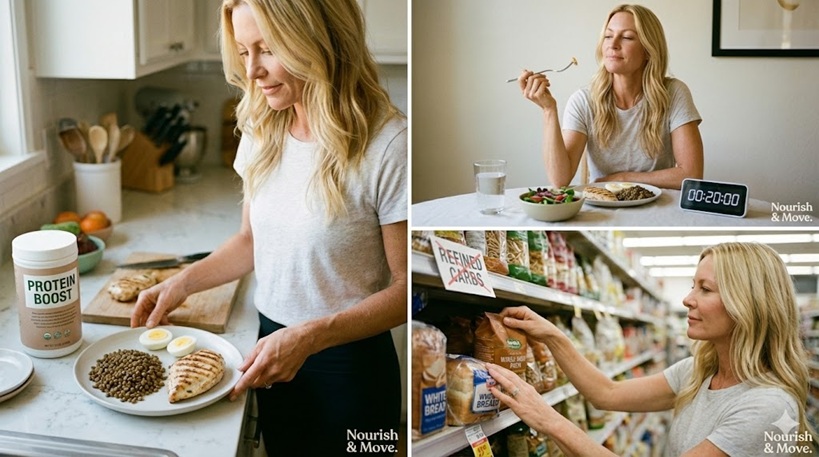
Focus on protein to protect your muscle, slow down your meals so your brain catches up with your stomach, and cut back on refined carbs that spike your blood sugar.
This isn’t about restriction. It’s about making choices that keep you strong and energized for the long haul.
Why Everyone’s Suddenly Talking About Midlife Eating
Somewhere between scrolling Instagram and hearing my doctor mention “slowing metabolism,” I realized the conversation around food had shifted.
It’s not just about weight anymore. Women I know are genuinely worried about staying strong enough to keep up with their lives, whether that’s chasing kids, traveling, or just not feeling wiped out by 3 PM.

The trigger? We’re watching our moms struggle with mobility issues, and frankly, none of us want that future. But the advice we’re getting is all over the place.
Some influencers swear by intermittent fasting, others push high-protein everything, and your aunt’s still doing Weight Watchers from 1997. It’s confusing, and when you’re confused, you either freeze or bounce between extremes.
What Actually Changes in Your Body (And Why It Matters)
Here’s what I’ve learned from digging into actual research: after your mid-30s, your digestive system starts producing fewer enzymes. That greasy burger that never bothered you at 25?
Now it sits like a rock. Your stomach doesn’t break down food as efficiently, which is why you might feel fuller faster or get that uncomfortable bloated feeling more often.
But here’s the kicker. While your appetite naturally decreases, your body’s need for quality nutrients actually increases.
You need more protein to maintain muscle mass because your body starts breaking down muscle tissue faster than it builds it back up.
This process, called sarcopenia, starts as early as your 30s. Left unchecked, it’s why some people seem to shrink and weaken as they age.
The current science backs up what nutritionists have been saying for a while now: protein intake becomes critical.
The American Journal of Clinical Nutrition published studies in 2024 showing that adults over 30 should aim for about 1.2 grams of protein per kilogram of body weight daily, significantly more than the old recommendations.
Foods like eggs, salmon, Greek yogurt, chicken breast, lentils, and tofu become your best friends.
What to Cut vs What to Keep
I spent months trying to figure out the “perfect” eating plan, and honestly, perfection doesn’t exist. What helped me was creating a simple framework based on what makes decisions easier, not harder.
What works in your favor
Cutting refined carbs like white bread, sugary cereals, and pasta reduces those blood sugar roller coasters that leave you crashing and craving more carbs an hour later.
You feel more stable throughout the day. Increasing protein keeps your muscles intact, which means better metabolism and more strength for everyday activities.
Slowing down your eating pace, like actually taking 20 minutes for a meal, gives your brain time to register fullness, so you stop before you’re uncomfortably stuffed.
What works against you
Extreme calorie restriction tanks your energy and your mood. I tried eating 1200 calories a day once, and I was miserable.
I was irritable, foggy-brained, and weak at the gym. Your body interprets severe restriction as starvation and holds onto fat while burning muscle instead.
That’s the opposite of what you want. Another trap is obsessing over every single food choice, which creates decision fatigue.
When you’re exhausted from meal planning, you end up ordering pizza out of sheer mental exhaustion.
Can you reverse course if this doesn’t work?
Yes, and that’s important. If you increase your protein intake and it doesn’t feel right, you can adjust.
If slowing down meals feels forced, you can find your own rhythm. The flexibility matters because rigid plans are the ones people abandon.
Does this reduce anxiety or create more?
For me, having a simple rule (protein at every meal, limit refined carbs, eat slowly) actually reduced stress.
I’m not counting every calorie or weighing food. I’m just making one good choice at a time.
What Actually Addresses the Uncertainty
The wellness market has caught onto this shift. Companies like Vital Proteins, Orgain, and Levels are building entire product lines around high-protein, blood-sugar-stable eating.
Vital Proteins collagen peptides (which I’ve tried) dissolve into coffee and add about 20 grams of protein without changing the taste.
Orgain makes plant-based protein shakes that actually taste decent, not like chalky sadness.
Levels offers continuous glucose monitors for regular people, not just diabetics, so you can see in real-time how foods affect your blood sugar.
Why does this matter?
Because these companies are responding to real demand from people trying to solve this exact problem.
The fact that continuous glucose monitors went from medical devices to mainstream wellness tools in just two years tells you something about how many people are worried about blood sugar management.
Nutritionists I’ve consulted emphasize whole foods over supplements when possible.
Dr. Gabrielle Lyon, who specializes in muscle-centric medicine, advocates for prioritizing protein at breakfast specifically, something like eggs with vegetables or Greek yogurt with nuts.
Her reasoning, backed by metabolic research, is that protein early in the day sets your blood sugar baseline and reduces cravings later.
Why the “Eat Less” Advice Falls Short
If we labeled everything statistically risky, airport security lines would need warning signs (stress-induced heart attacks), cheese boards would need skull symbols (saturated fat), and your office chair would come with hazard tape (sedentary lifestyle).
Obviously, that’s absurd.
The point isn’t that risks don’t exist. It’s that context matters more than categorical rules. Eating less works for some people in some situations.
But for a woman in her 30s who’s trying to maintain muscle while managing work stress and maybe raising kids, “just eat less” is terrible advice. You need fuel. You need nutrients. You need to not be hungry and distracted all day.
What I’m Actually Doing (and Why It’s Working)
I’ve settled into a pattern that doesn’t require constant willpower. About half my plate is vegetables or salad (fiber that slows digestion).
A quarter is protein, chicken thighs, salmon, chickpeas, whatever.
The last quarter is carbs, but I’ve shifted to things like sweet potatoes, quinoa, or brown rice instead of white pasta or bread. It’s not perfect every day, but it’s sustainable.
For breakfast, I rotate between three options scrambled eggs with spinach, Greek yogurt with berries and almonds, or a protein smoothie with banana and peanut butter.
Simple enough that I don’t have to think, varied enough that I don’t get bored.
The game-changer was timing. I eat slowly, putting my fork down between bites, which sounds silly but actually works.
My brain catches up with my stomach, and I stop eating when I’m satisfied rather than stuffed. That 20-minute threshold isn’t arbitrary.
It’s how long it takes for your gut hormones to signal your brain that you’ve had enough.
What This Isn’t About
This isn’t about fitting into smaller jeans or looking like fitness influencers. Most of those people have personal trainers, chefs, and genetics you can’t replicate.
This is about having energy for your actual life. Being able to hike without your knees giving out. Carrying groceries without struggling. Playing with your kids or nieces without getting winded.
The freedom to live actively in your 40s, 50s, and beyond comes from choices you make now. Building muscle isn’t vanity. It’s insurance. Eating protein isn’t a trend. It’s maintenance.

Q&A
Does this mean I can never have pasta or bread again?
No. I still eat carbs, just not as the main event of every meal. When I do have pasta, I pair it with a big serving of protein and vegetables so my blood sugar doesn’t spike and crash.
Isn’t high-protein eating just another fad diet?
The difference is that protein recommendations are based on decades of research about muscle preservation and metabolic health, not on selling books or shakes. The specific products might be trendy, but the underlying science is solid.
What if I’m vegetarian or don’t eat meat?
Tofu, tempeh, lentils, chickpeas, edamame, Greek yogurt, cottage cheese, and protein powder all work. Plant-based protein is completely viable. You just need to be more intentional about including it.
How do I know if I’m getting enough protein?
A rough guideline: aim for 25-30 grams at each main meal. That’s about the size of your palm in chicken or fish, a cup of Greek yogurt, or a cup and a half of cooked lentils.
- Dietary protein intake in midlife in relation to healthy aging – results from the prospective Nurses’ Health Study cohort – PMC
- Eating plant protein in midlife may help women stay healthy as they age | Harvard T.H. Chan School of Public Health
- Why Protein Is Important As You Enter Midlife And Beyond – Victoriahealth.com Ltd
- Healthy eating is associated with healthy aging, according to a new study | CNN