Collagen water is trendy, but the science isn’t solid yet.
It may help hydration and aging skin, yet it’s pricey flavored water for many.
Try it for the ritual, not the miracle, your habits matter more than peptides.
Why Everyone’s Suddenly Drinking Their Skincare
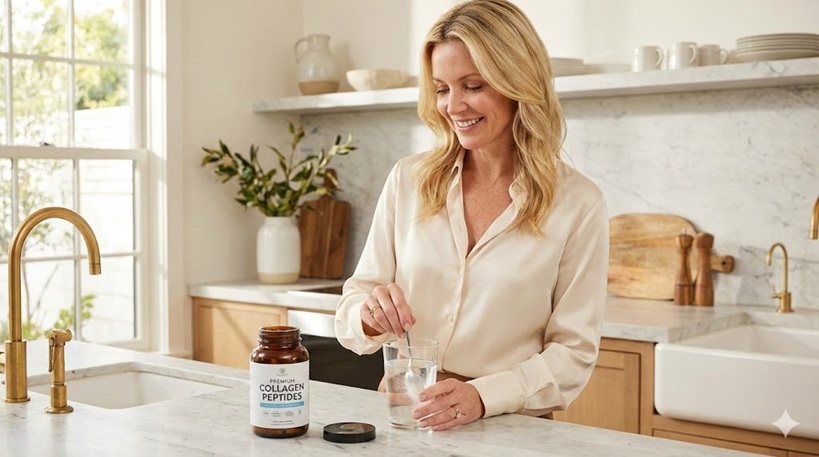
About six months ago, my Instagram feed started showing UK influencers chugging these pastel-colored drinks that looked like fancy vitamin water.
Turns out, collagen water is having a moment, specifically with women over 40 in Britain who are swapping their morning coffee for bottled collagen drinks.
The trigger? Social media did what it does best and turned a niche wellness product into a “you’re missing out if you’re not doing this” trend.
TikTok videos showing before-and-after skin comparisons (take those with a grain of salt) and testimonials about achy knees feeling better started piling up. Now it’s crossing the Atlantic, and US brands like Vital Proteins and Dose & Co are pushing their versions hard.
But here’s where it gets complicated. Collagen water sits in this weird space between actual supplement and lifestyle accessory. Is it genuinely different from regular hydration plus a collagen pill? Or are we paying $4 per bottle for marketing genius?
What You’re Actually Getting in That Bottle
Most collagen waters use hydrolyzed collagen peptides, basically broken-down protein fragments small enough for your digestive system to handle.
The science-y term is “low molecular weight,” which means these peptides can potentially get absorbed into your bloodstream instead of just getting broken down like regular protein.
Here’s where brands differentiate themselves. Some add vitamin C (which helps your body make its own collagen), others throw in hyaluronic acid (a moisture magnet for skin), and a few include biotin or electrolytes. The collagen itself usually comes from bovine (cow) or marine (fish) sources.
The taste ranges from “barely there” to “tropical fruit punch,” depending on the brand. Unlike protein shakes that can feel heavy and chalky, these are designed to drink like enhanced water. That’s the whole appeal because it doesn’t feel like you’re taking medicine.
The Biology Part That Actually Matters
After about 25, your body starts producing roughly 1% less collagen every year. By your mid-30s, you might notice your skin doesn’t snap back quite as fast when you pinch it. By your 40s, joint stiffness creeps in during workouts or after sitting too long.
Collagen is the structural protein that holds your skin, bones, tendons, and cartilage together. When production drops, things start feeling looser, creakier, drier. That’s not dramatic aging but that’s just how bodies work.
The whole premise behind drinking collagen is that you’re giving your body the raw materials it needs to rebuild these structures. Some dermatologists argue that ingested collagen peptides can signal your fibroblasts (skin cells) to kick up their own collagen production.
Other experts say there’s no solid proof your body directs those peptides specifically to your face instead of just processing them like any other protein.
This is where things get murky, and honestly, the research hasn’t caught up to the hype yet.
What You’re NOT Getting (The Stuff Nobody Mentions)

Let’s talk about what collagen water doesn’t do, because that matters just as much.
It won’t reverse sun damage.
If you’ve spent your 20s tanning without SPF, no amount of collagen drinks will undo that. You’d need retinoids, laser treatments, or actual dermatological intervention.
It’s not a protein replacement.
Most bottles contain 10 to 15 grams of collagen, which sounds decent until you realize you need around 50 to 75 grams of total protein daily (depending on your weight and activity level). You still need real food.
It’s expensive compared to alternatives.
A month’s supply of collagen water costs roughly $80 to $120 if you’re drinking it daily. Regular collagen powder runs about $30 to $40 monthly, and bone broth (which has natural collagen) costs even less if you make it yourself.
The convenience factor is real, but so is the markup.
You’re paying for grab-and-go packaging, not necessarily better results.
Decision Criteria and Does This Actually Make Sense for You?
Pros
You’re already terrible at remembering to take supplements. Having a cold bottle in your fridge that you actually want to drink beats another dusty jar of pills in your cabinet.
The ritual itself has value because if it makes you more consistent about hydration and gives you a small wellness moment during a chaotic day, that psychological benefit isn’t nothing.
Some women genuinely report shinier hair, stronger nails, and less joint creaking after 8 to 12 weeks of daily use. The placebo effect is powerful, but if you feel better, does it matter why?
Cons
The cost adds up fast. If you’re on a tight budget, spending $100 or more monthly on what might just be expensive water feels wasteful when that money could go toward a gym membership, therapy, or actual medical care.
The environmental impact of single-use plastic bottles is real. Even recyclable plastic has issues, and if sustainability matters to you, this habit conflicts with those values.
There’s limited long-term research proving that drinking collagen beats eating collagen-rich foods like bone broth, chicken skin, or fish. You might get the same results from a $15 tub of gelatin powder added to your morning smoothie.
Can You Reverse Course If This Doesn’t Work?
Yes, easily.
Unlike Botox or filler, you’re not locked into anything permanent. Stop buying it, and the only consequence is you’re back to regular water. Your skin won’t suddenly collapse.
But here’s the thing. If you try it for 2 to 3 months and see zero difference in how your skin feels or how your knees hold up during runs, you’ve spent $200 to $300 with nothing to show for it except confirmation that this wasn’t your miracle solution.
Does This Choice Make Your Next Decision Easier?
This is where I think collagen water either clicks for you or doesn’t.
If drinking it means you’re more intentional about hydration overall (you’re tracking your water intake, paying attention to how your body feels, thinking about what you’re putting in it) then it serves as a gateway habit. It might push you toward other wellness upgrades like adding more vegetables, moving daily, or finally booking that dermatologist appointment.
But if it becomes a replacement for actual health decisions (like “I drink collagen water so I don’t need sunscreen” or “this is cheaper than seeing a nutritionist”), then it’s just procrastination in a pretty bottle.
What’s Currently Available and Why These Brands Keep Coming Up
Vital Proteins Collagen Water is probably the most visible in US stores. It’s got 10 grams of bovine collagen plus hyaluronic acid, comes in flavors like lemon and blackberry, and runs about $3.50 to $4 per bottle. People like it because it’s widely available at Target and Whole Foods.
Dose & Co Beauty Collagen Water leans into the “beauty from within” marketing with added vitamin C and bioavinoids. It’s pricier at around $4.50 per bottle but markets itself as premium-grade marine collagen. Reviews mention it tastes cleaner than bovine versions.
Dirty Lemon with Collagen (if you can still find it because they’ve had distribution issues) was an early player mixing collagen with charcoal and other trendy ingredients. The jury’s out on whether combining multiple wellness buzzwords in one drink actually compounds benefits or just dilutes them.
Generic store brands are popping up at CVS and Walgreens for $2 to $3 per bottle, but the collagen content is often lower (5 to 7 grams), and the ingredient lists include more fillers and sweeteners.
Why do these particular brands dominate? Distribution channels and influencer partnerships. They got into major retailers early and locked down shelf space before smaller competitors could scale up.
The Anxiety This Whole Conversation Creates
Here’s what nobody talks about. Wellness trends like this thrive on the anxiety of “am I doing enough?”
You see someone with great skin drinking collagen water, and suddenly your regular water feels inadequate. The message becomes “if you’re not actively supplementing and optimizing, you’re falling behind.” That’s exhausting.
The truth is, most people with glowing skin aren’t glowing because of one specific product. They’re sleeping enough, managing stress, eating vegetables, staying hydrated with regular water, wearing SPF daily, and probably have decent genetics. The collagen water might be part of their routine, but it’s not the hero ingredient.
If drinking collagen water reduces your anxiety because it feels like you’re taking action, that’s valid. But if it’s creating new anxiety (comparing yourself to others, worrying you’re wasting money, stressing about whether you’re doing it “right”) then it’s counterproductive.
You’re Probably Wondering and Does Drinking Collagen Actually Get Absorbed?
This is the million-dollar question, and here’s what current research suggests.
Some studies show that hydrolyzed collagen peptides can increase skin elasticity and hydration when consumed daily for 8 to 12 weeks. A 2019 review published in the Journal of Drugs in Dermatology found modest improvements in skin appearance among participants taking collagen supplements.
However, most of these studies were small, short-term, and sometimes funded by supplement companies (which doesn’t automatically invalidate them, but adds a layer of skepticism).
Your body breaks down all protein into amino acids during digestion. The question is whether those specific amino acids from collagen peptides reassemble into usable collagen in your skin and joints, or if they just get used as general protein building blocks wherever your body needs them most.
Some researchers argue that collagen peptides send signals to your cells to produce more collagen. Others say there’s no mechanism for your body to “know” to send those peptides specifically to your face versus your liver or muscles.
The honest answer? We don’t fully know yet. The science is promising but not definitive.
Where This Leaves You
Collagen water isn’t a scam, but it’s also not a guaranteed solution. It exists in that frustrating middle ground where some people swear by it and others see zero results.
If you’ve got the budget, you’re curious, and you like the ritual of it, trying it for three months won’t hurt anything except your wallet. Track how you feel and take photos, note any changes in joint comfort, see if your nails grow faster or hair feels thicker. Give it a real shot with honest evaluation.
If money’s tight or you’re skeptical of wellness trends, you’re not missing out on some revolutionary health breakthrough. Focus on the basics like hydration with regular water, eating protein-rich foods, protecting your skin from sun damage, and moving your body regularly. Those unglamorous habits will do more for your long-term health than any trendy drink.
The range of outcomes here is pretty wide, from “this changed my skin” to “I noticed absolutely nothing,” and where you land probably depends on your individual biology, how deficient you were in collagen-supporting nutrients to begin with, and how consistent you are with it.
There’s no single right answer. Just what makes sense for your body, your budget, and your bandwidth for trying new things.
Q&A
Q1. Does drinking collagen water really improve skin elasticity?
Some studies suggest minor benefits within 8–12 weeks, but evidence is limited. It supports hydration more than dramatic anti-aging effects.
Q2. Is collagen water better than just taking collagen supplements?
Not necessarily. It’s easier to drink and maintain as a ritual, but both work similarly in the body, it’s more about consistency than form.
Q3. Is it worth the high cost?
If consistency boosts your wellness habits, maybe. But nutritionally, collagen powder or protein-rich meals deliver similar benefits for less money.
Q4. Can collagen water replace daily protein intake?
No. It provides about 10~15g of collagen, far from the 50~75g protein most adults need. Think “skin support,” not “meal replacement.”
Q5. What’s a good reason to try collagen water?
If you struggle to remember supplements or want a small self-care ritual that feels luxurious without reshaping your routine.