
Last year I spent $820 on dating optimization. Premium apps, profile coaches, the works. My match rate? Still under 2%. Then I realized something. The entire system profits when I feel inadequate. I stopped playing their game, and everything changed.
The Starbucks Moment

Last Tuesday, I watched my friend Sarah spiral in real-time.
She’s thirty-three, scrolling Hinge like it’s her job. Her married sister leaned over. “Maybe you’re just too picky, Sarah.”
I saw Sarah’s face crumple. That mix of shame and confusion.
I’m a relationship columnist. I’ve heard this exact conversation for three years straight. Different cities, same script. LA cafés. Chicago brunches. Austin bars.
Something clicked for me. This isn’t individual failure. This is systemic.
The Numbers Don’t Lie
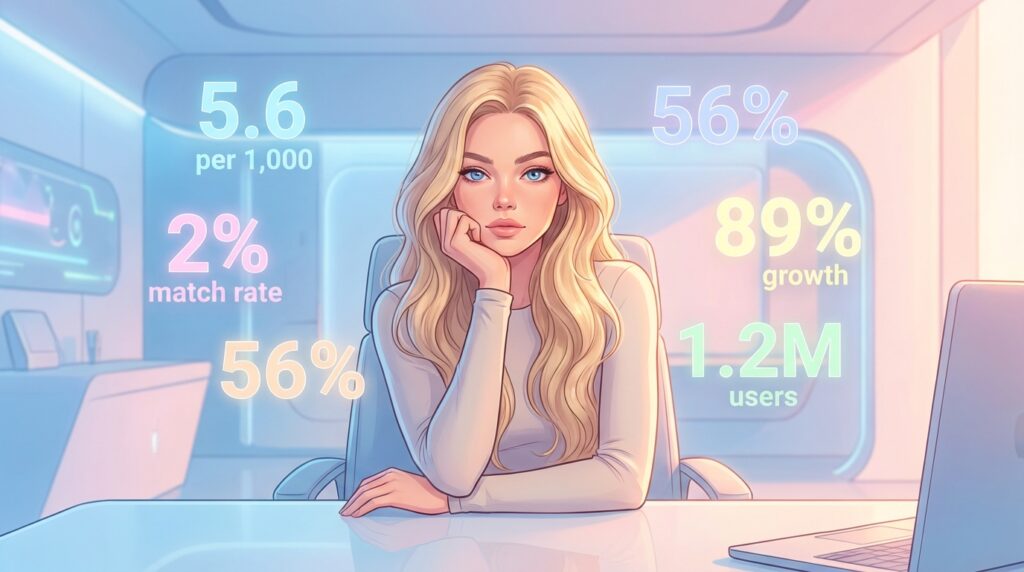
I started digging into data because numbers tell the truth.
January 2026: U.S. marriage rates hit 5.6 per 1,000 people. Lowest rate in American history.
Fifty years ago, two-thirds of households were married couples. Today? Under half.
But data doesn’t show what floods my inbox daily. Women stuck between two nightmares. Settle for someone boring, or stay single and endure endless “What’s wrong with you?” questions.
The Framework Is Rigged

Here’s what took me too long to see. Modern dating conversation is designed to make us fail.
We’re told to think about “market value.” Find someone at our “level.” If we’re struggling, we’re either aiming too high or not good enough.
I recognized this immediately once I saw it. College admissions. Salary negotiations. Real estate wars. Supply and demand. Scarcity mindset. Winners and losers.
The moment I accepted that frame, I lost. I wasn’t a person anymore. I became a product trying to prove I was worth someone’s investment.
Tinder’s 2026 report shows 56% of daters now prioritize “honest conversations” over looks. We’re exhausted. We’re clawing back to something human.
Who Profits From My Loneliness
I followed the money for three months. What I found made me furious.
Dating apps, coaches, matchmakers, AI therapists. They’ve convinced me the question is “How do I win this market?”
That frame benefits them, not me.
I calculated what I spent last year “optimizing.” Hinge Premium, $240. Profile coach, $400. Premium filters, $180. I was chasing outcomes most people never achieve.
Match rates stay below 2% despite millions of daily swipes. Two percent.
That’s not because we’re unreasonably picky. Apps make money when I stay single and searching, not when I delete the app.
The Restaurant Test

This analogy came to me in therapy.
Imagine a restaurant where I fill out a ten-page form, submit five photos with specific lighting, write 500 words on why I deserve to eat there, then wait for an algorithm to decide if I’m worthy.
If matched, I get one meal. One chance to prove I’m interesting enough for a second visit.
Good system for serving hungry people? Or designed to make eating there feel like an unearned privilege?
Dating apps sold us this as normal. It’s not. It’s gamified connection to keep me scrolling and paying.
The Real Trade-Offs

I made myself write out honest trade-offs. Not fairy tales. Reality.
If I Lower My Standards
I gain: 40-60% more matches. Faster relationships. Less mom pressure. No more rejection torture.
I lose: Daily “Am I settling?” thoughts. The fantasy of partnership that elevates me. Therapists tell me clients who married partners they weren’t excited about carry low-grade dissatisfaction that infects everything.
One Manhattan therapist’s client said, “I compromised on the most important relationship, so why expect excellence anywhere else?”
That destroyed me.
If I Hold Out
I gain: My sanity. Stop feeling like I’m failing. Build a life I like. Partnership becomes addition, not desperate solution.
I lose: More time alone. Watch friends marry. Social stigma. Family pressure. Biological clock concerns.
I won’t lie. It’s not easy.
What I Tested
I tried everything. Here’s what I found.
Dating Apps
Twenty-seven percent of 2025 marriages started on apps. But match rates stay at 2%.
I spent $240 on Hinge Premium. Their AI promised compatibility prediction. I got more matches with zero chemistry.
AI Coaches
Norton’s January 2026 study: 70% would use AI for post-breakup therapy. 78% trust AI for dating advice.
I tried Sync and three AI chatbots. They gave brutal honesty my friends won’t. One told me my photo looked unapproachable, my bio sounded desperate, my standards were “statistically unrealistic.”
That stung. But they can’t change market dynamics. They just help me compete better in a broken system.
Matchmakers
I interviewed matchmakers charging $3,000 to $50,000. They promise pre-vetted candidates.
But they can’t conjure people who don’t exist in my area. One LA matchmaker told me off-record, “My successful clients come with realistic expectations.” Translation: adjusted standards.
Therapy
Two years in therapy helped me identify patterns and process trauma. But my therapist can’t tell me whether to lower standards or hold out.
Therapy gives clarity. Doesn’t resolve the dilemma. Market conditions unchanged.
The Pattern
Every service treats symptoms. Loneliness, confusion, inefficient searching. Not the root cause: biological selectivity meets brutal market economics.
They make it less painful. Don’t eliminate the trade-off.
What I’m Doing Instead
After a year of research, I realized the lowest stress option isn’t “lower standards” or “hold out.”
It’s rejecting the premise.
I stopped optimizing for a system designed to make me inadequate. Stopped proving my worth. Stopped measuring connection as “upgrading” or “settling.”
I started asking different questions. What do I actually want? Not what society says. Not what looks impressive. What makes my daily life better?
Research tracking couples over decades shows: expectation gaps matter less than genuinely enjoying time together. Happy couples found someone who makes boring less boring and hard more bearable.
Not about height, income, followers. About compatibility algorithms can’t measure.
What This Looks Like

When friends say “adjust expectations,” I hear differently now.
My instinct that something’s off isn’t me being difficult. It’s recognizing the frame is broken.
My exhaustion isn’t doing it wrong. It’s forcing human experience into commercial systems.
My real choice: Keep playing an unwinnable game, or step outside and find connection without treating people like products.
Practically: I stopped measuring worth on others’ scales. I look for chemistry, not checklists. I’m interested in people who don’t “make sense” and pass on ones who check every box but don’t make my heart race.
I’m building a life I like first.
The Risks and Freedom
I’m accepting real risks. Alone longer. Miss “good enough” relationships. Watch college friends have babies while I’m figuring this out.
But what I’m gaining: My sanity. Stop feeling like I’m failing. Stop timeline anxiety pushing me wrong. Stop treating my future like optimization problems. Start treating it like my actual life.
What I’ve Watched Happen
I’ve tracked this in my friend group for three years.
People stuck in marketplace thinking, constantly calculating and adjusting, are universally miserable. Partnered or single doesn’t matter. The frame itself makes them unhappy.
People who rejected the frame and just live while staying open? Not always partnered. Noticeably less anxious.
When they connect, it’s based on something real. Not mutual desperation.
The Real Trade-Off

The marketplace says my value decreases over time. Especially approaching forty. Accept what’s available before it’s too late.
That assumes I’m only valuable for reproduction and youth appeal.
I reject that completely. I’m whole. I built a career, friendships, interests, a life I’m proud of. I want enhancement, not a checked box before arbitrary deadlines.
The trade-off isn’t “standards versus loneliness.”
It’s “rigged game versus life on my own terms.”
Once I saw it that way, my decision became simple.
Not easy. Simple.
And that clarity is worth more than any match I’ve gotten on a dating app.