
That “detox with juicy fruits” promise? It triggers more anxiety than it solves. Your liver and kidneys already handle detox 24/7, and what you actually need is a low-stress system to stabilize hydration when your body sends warning signals (dry lips, brain fog, sugar cravings).
Tomatoes, grapes, watermelon, and cherries can help with hydration and fullness, but calling them “detox foods” is marketing, not medicine. But how do you actually build that system without overthinking it?
Why “Detox” Content Hits My Nervous System
My algorithm keeps serving me these lines lately. “Flush toxins.” “De-puff instantly.” “Skin so clear.”

The second I read them, my brain hits the panic button. Am I doing something wrong?
Am I. dirty inside?
But then I pause. Because “detox” isn’t really a medical term. It’s a marketing word. Your body already has a detox system working around the clock, and that’s your liver, kidneys, and digestive tract. They don’t need a juice cleanse to function.
That said, water-rich fruits and veggies (tomatoes, grapes, watermelon, cherries) can absolutely help with hydration, appetite control, and getting fiber and antioxidants. That part is real. The trick is keeping your expectations realistic, not magical.
This post isn’t about handing you “the answer.” It’s about giving you the decision-making framework so you can judge for yourself, minus the anxiety spiral.
The Warning Signs That Show Up First
It always starts small.
I wake up. My lips are dry. My head feels foggy.
On the commute, I’m craving carbs like my life depends on it.

Then the warning signs stack up.
- Sugar cravings out of nowhere
- Skin looks dull (could be my imagination, could be real)
- Face feels puffy by afternoon
- I’ve had two coffees, barely any water
My brain wants to label the cause as “toxins.” But realistically? It’s usually a combo of sleep debt, salt intake, dehydration, stress, hormones, or last night’s wine.
The real cause-and-effect pattern looks more like this.

Low water plus high coffee and salt leads to water retention (that puffy feeling) or my body mistakes thirst for hunger, so snacking spikes. Low fiber plus low water slows digestion, making my body feel heavy. Poor sleep messes with hunger hormones, so I reach for sweets impulsively.
So instead of asking “Do I need to detox?” I ask this instead. “Can I quietly reset with hydration, fiber, and minerals?”
How I Actually Judge My Choices

Here’s my real-life checklist. No fluff.
Pros of using fruits for hydration. Boosts water intake in a way that tastes good when plain water feels boring. Chewing plus volume acts as a natural brake on overeating. Sneaks in fiber, potassium, and antioxidants without effort. Swapping dessert for fruit lowers total sugar and calorie load.
Cons (real talk). Fruit still has sugar, and it’s natural, yes, but not unlimited. If you have kidney issues (potassium restrictions) or blood sugar concerns, you need to be careful. If “detox” becomes an obsession, it can feed anxiety and disordered habits.
Can I reverse this decision?
Adding tomatoes or grapes to one or two meals? Totally reversible. Low-risk move. Going full “juice cleanse for three days”? Hard to reverse. High chance of a binge rebound the next day.
Does this choice reduce my anxiety?
If my goal is “remove toxins,” I can’t measure success. That makes anxiety worse. If my goal is “drink more water today and add one serving of produce,” that’s measurable. Anxiety drops.
Does this choice make tomorrow easier?
Yes. When I front-load hydration and fiber, I’m way less likely to spiral into sugar cravings or binge snacking later. Individual results vary, but this pattern held true for me.
What Actually Works (With Proof)
“Detox” is hard to measure at home. The word itself is vague. So I focus on things I can track, like hydration status, salt intake, bowel rhythm, and sleep quality.
Tools that actually cut through uncertainty.
A clear water bottle with volume markings changes behavior automatically when you can see how much you’ve drunk. It’s not willpower. It’s systems.
A urine color chart plus notes app gives a rough hydration estimate without obsessing. Note that B vitamins and certain foods change color, so treat this as a reference, not gospel.
Electrolyte powder or tablets (use only when needed) help after heavy sweating or stomach issues when plain water might not be enough. But you don’t need them daily, and watch sodium if you have restrictions.
A kitchen scale or “palm-size” guide helps because fruit is healthy, but overdoing it still means extra sugar. A loose standard beats “eating by feel” when you’re trying to reduce decision fatigue.
Basic blood work from your annual check-up is the most direct answer if you’re genuinely worried about your liver or kidneys. Way more reliable than any juice or fruit.
The 4 Fruits and What’s Legit vs. What’s Hype
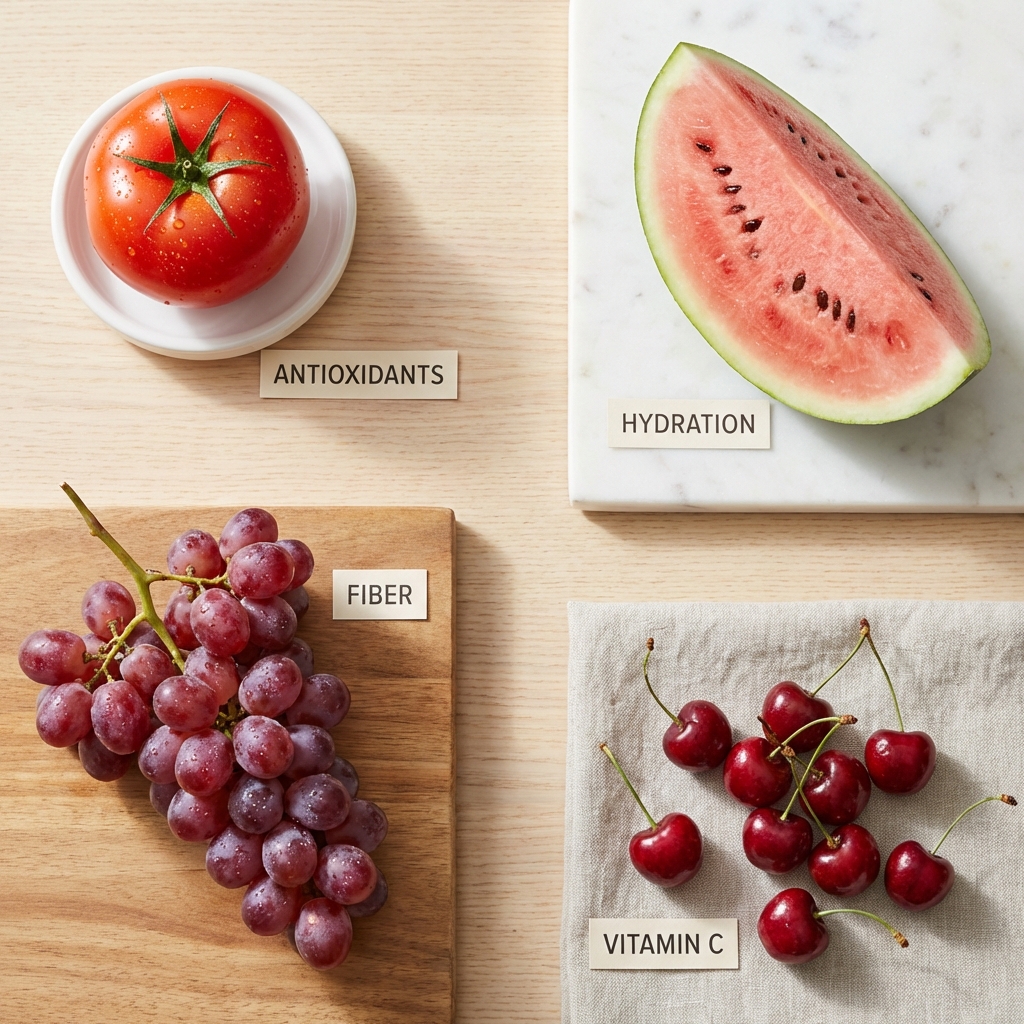
Let me separate what’s real from what’s overselling.
Tomatoes have high water content (around 90 percent or more), which helps with fullness. They contain potassium (can support sodium balance, but “de-puffing” depends on many factors).
Lycopene in red tomatoes is a well-studied antioxidant (better absorbed with heat plus fat like olive oil). Watch out for oversimplifications like “tomatoes prevent bloating” because sleep, salt, and hormones matter way more.
My real routine involves a tomato plus drizzle of olive oil plus tiny pinch of salt (or skip the salt) in the morning.

Grapes contain polyphenols (including resveratrol) in the skins. Antioxidants are real, but claiming “cancer prevention” from eating grapes is a stretch because human evidence is complex and dose-dependent.
Watch out for overselling. Eating skins is fine, but wash thoroughly. My real routine happens when I crave sweets, and I’ll have one cup (one handful), not the whole bag.
Watermelon has extremely high water content (about 90 percent or more), making it great for thirst. It contains lycopene and is relatively low-calorie (but calories add up with portion size). Watch out for “alkaline water” claims because they’re scientifically shaky.
Your blood pH is tightly regulated, and food doesn’t “alkalize” your body the way marketing suggests. Claims about “helping liver convert ammonia to urea” describe normal liver function (urea cycle), not proof that watermelon enhances it.
My real routine happens after workouts or outdoor heat, when I’ll have watermelon plus water (or electrolytes if needed). But eating too much late at night means bathroom trips that wreck sleep.

Cherries are rich in anthocyanins (polyphenols). Tart cherry juice has some research on sleep (melatonin) and recovery, but it’s modest, not miraculous.
Watch out for “improves inflammation” language that can sound like a medical claim. Food is lifestyle support, not medicine. My real routine involves late-night snack cravings getting a handful of cherries or plain yogurt plus cherries.

My Actual 10-Minute Routine
Step one involves filling my water bottle to today’s target (marked tumbler).
Step two means picking one fruit based on my signal. Morning brain fog gets tomato. Sugar cravings get grapes (one handful). Heat or activity gets watermelon. Late-night munchies get cherries (or tart cherry, unsweetened).
Step three is adding a little protein or fat (yogurt, cheese cube, few nuts) to smooth out the blood sugar roller coaster.
My Bottom Line
I don’t eat tomatoes, grapes, watermelon, or cherries to “detox.” I use them as a low-effort system to stabilize hydration, fiber, and minerals when my body sends warning signals, and I do this because it requires less thought, less prep, and has a lower failure rate.

That’s my version of “no drama, just systems.”
If you want, tell me one thing about your routine (work schedule, sleep patterns, bloating timing, or sensitivity to sugar). I’ll map out which of these four fruits fits your pattern best, plus which tool (water bottle, electrolytes, portion guide) lowers your failure probability the most.
Quick Q&A
Do these fruits actually “detox” my body?
Not in the way marketing suggests. Your liver and kidneys handle detox naturally. What fruits do offer includes hydration, fiber, and antioxidants that support overall function. Think of them as system support, not a cleanse button.
Can I eat unlimited fruit since it’s healthy?
Not in the way marketing suggests. Your liver and kidneys handle detox naturally. What fruits do offer includes hydration, fiber, and antioxidants that support overall function. Think of them as system support, not a cleanse button.
What if I have kidney issues or diabetes?
Talk to your doctor first. Potassium and sugar need monitoring in those cases, and “detox” trends can actually be risky.
What’s the biggest mistake people make?
Setting unmeasurable goals like “flush toxins.” It feeds anxiety because you can’t track success. Instead, aim for actionable targets like “drink eight cups of water today” or “add one serving of produce.”